I am Christian Williams, and I’m a marine science microbiology and immunology double major at the Rosentiel School of Marine and Atmospheric Science (RSMAS) at the University of Miami in Coral Gables FL. Growing up, I always was interested in biology and life science. From constructing the tallest of redwood trees, to adapting to the extremest of temperatures found in deep sea hydrothermal vents, I was fascinated by the miraculous things that life could do. I always wanted to understand how life did such amazing things, so I always knew I would want to choose a career which would allow me to study the mechanisms of life: research science.
When I first came to Miami, I was deciding what major I should choose when I came across RSMAS’s double major program. I found this program particularly attractive because it would allow my to experience multiple fields in biology. This led me to take up my current major, because it would allow me to see the ecological side of marine science and marine biology, as well as the medical side of biology in immunology. Since then, I have really developed an interest for microbiology and cell biology.
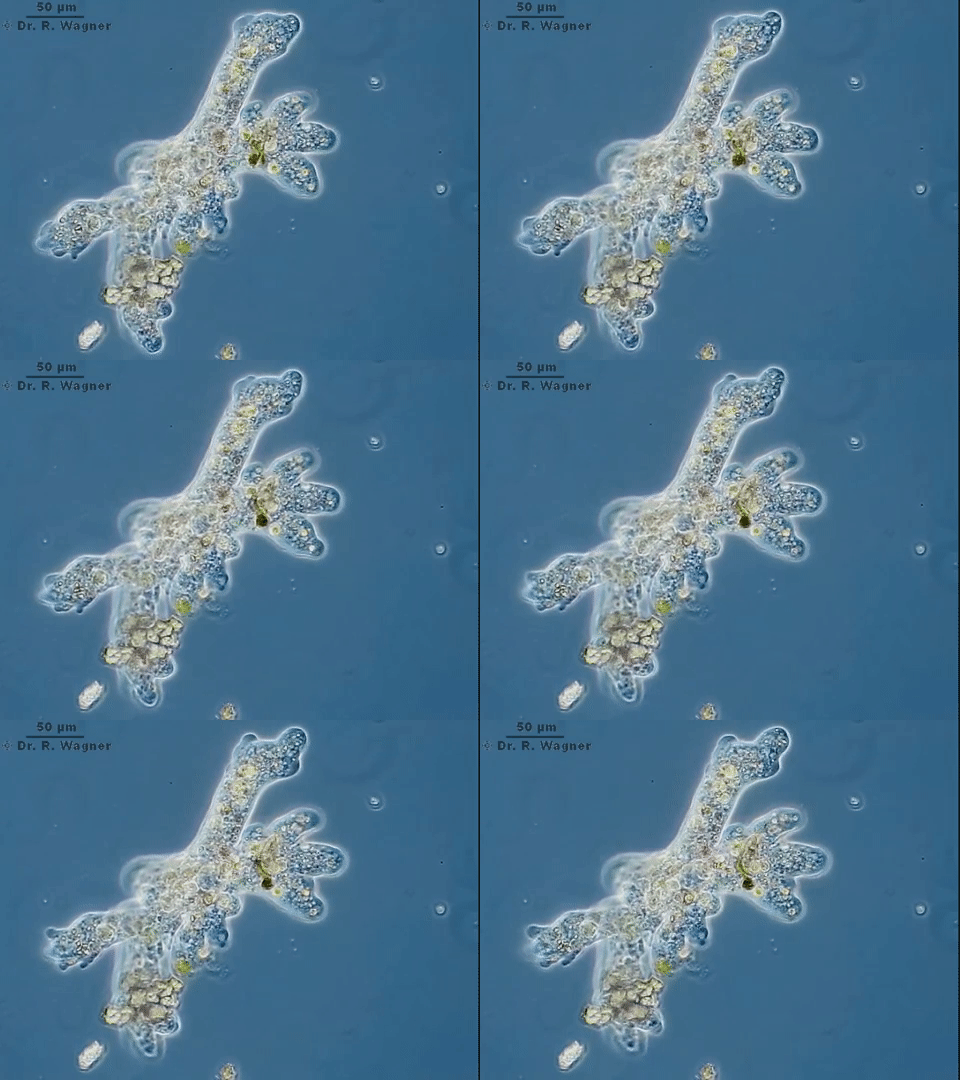
Microbiology, as I define it, is simply the study of organisms that cannot be seen with the human eye. This includes an extreme range of different sizes. From the largest plant cells, all the way down to the smallest of bacteriophage (viruses that can infect bacteria). Because these organisms are so small, we as microbiologists have to employ a variety of tools and techniques in order to study the alien world of microorganisms. This includes lots biochemical tests, advanced microscopes, and gene sequencing technologies.
For example, one general procedure that we commonly use in labs is a simple stain, which is the addition color to a bacteria or other microbe so that we can see them. Most bacteria are actually completely transparent, so the only way we can see them through a light microscope is by dying them with a pigment that their cell walls will absorb. Once we are able to see them, we are able to study their morphology (body shape) and behavior.

There are so many applications of microbiology in medical research, food science, environmental science, and virtually every biological science. One of the hot topics in Microbiology right now is gene sequencing. We currently have hundreds of thousands of genotypes of bacteria and other microbial species completely mapped out. But its not just the genes that are particularly interesting, but the proteins that the genes code for that are where the focus is. For example, a well know pathogenic bacteria, E. coli, has all of its genetic code mapped out, but we only know a fraction of what those genes actually do. There are so genes and proteins that we don’t know about, that the research opportunities to figure out what they do are virtually endless.
By figuring out all that microbes have to offer, we can do amazing things like synthesize treatments, such as insulin for diabetic people from bacteria with a human gene, find new antibiotics from soil bacteria, and even invent new technologies for decomposing waste or sustainably fertilizing farms.
- The State of Antibiotic Resistance in the World TodayWe are probably all familiar with multiple health problems that affront the world today, such as food and water contamination in some countries, malnourishment in others, obesity in developed countries, and in much more recent circumstances, the emergence of SARS- CoVi-2, the coronavirus which causes COVID. However, one of the rising problems that is… Read more: The State of Antibiotic Resistance in the World Today
- Blog Reviews on Antibiotic ResistanceYou’ve all probably taken antibiotics in the past for various infections and ailments. They are seen as a “cure all” for common bacterial pathogens, and the diseases that they cause. For example, if you have ever had strep throat (caused by Streptococcus pyogenes) or went to the doctor with an earache caused by Streptococcus pneumoniae,… Read more: Blog Reviews on Antibiotic Resistance
 The Microblog